The Callais Decision and What Comes Next for Mississippi

The U.S. Supreme Court’s ruling in Louisiana v. Callais is not just a legal decision—it is already reshaping what happens next in Mississippi. Governor Tate Reeves has already announced that lawmakers will return to Jackson for a special session to redraw judicial district lines in response to both this decision and prior federal court findings.

What the Decision Means
At its core, the Callais decision significantly weakens how Section 2 of the Voting Rights Act is applied. For decades, Section 2 has been one of the most important tools available to challenge maps that dilute the voting strength of Black voters and other minority communities. Courts have used it to ensure that representation reflects the people—not just political power.
Now, the legal standard has shifted in a way that could make it far more difficult to prove discrimination in redistricting. That shift will have both immediate and long-term consequences.
Why Mississippi Is Ground Zero
Mississippi is already at the center of this issue. A federal court previously ruled that the state’s Supreme Court districts violated the Voting Rights Act by diluting Black voting power and ordered new maps to be drawn. Now, instead of those protections guiding the outcome, the Legislature will enter a special session under a new legal framework—one that weakens the very protections that led to that ruling in the first place.
This creates a pivotal moment.
Redistricting is not just about lines on a map. It is about who has power, whose voices are heard, and who has a fair opportunity to elect leaders of their choice.
The Warning Signs Were Already There
Mississippi Democrats attempted to get ahead of this moment. We introduced the Robert G. Clark Mississippi Voting Rights Act to establish state-level protections against voter suppression and discriminatory redistricting. That legislation did not pass. At the same time, the Legislature declined to proactively redraw Supreme Court districts—even after being directed by a federal court—while waiting on this decision.
Now we are here.
What Could Happen Next
With this ruling and the upcoming special session, several outcomes are possible:
New judicial district maps that may reshape representation for years
Increased efforts to redraw districts in ways that shift political power
Broader conversations across the South about revisiting legislative and congressional maps
Mississippi may likely be among the first places where that reality is tested.
What This Does—and Does Not Do
This decision does not stop anyone from registering to vote. It does not stop anyone from casting a ballot.
But it may make it harder for communities—particularly Black and Brown communities—to be fully represented in the outcomes of those elections. And, we must understand, representation matters.
So, Where We Go From Here
This is a serious and sobering moment. But it is not the end of the fight.
As a legislator, I will continue to:
Advocate for fair and transparent redistricting processes
Push for state-level protections that safeguard voting rights
Hold systems accountable where representation is at risk
Educate and mobilize communities across Mississippi
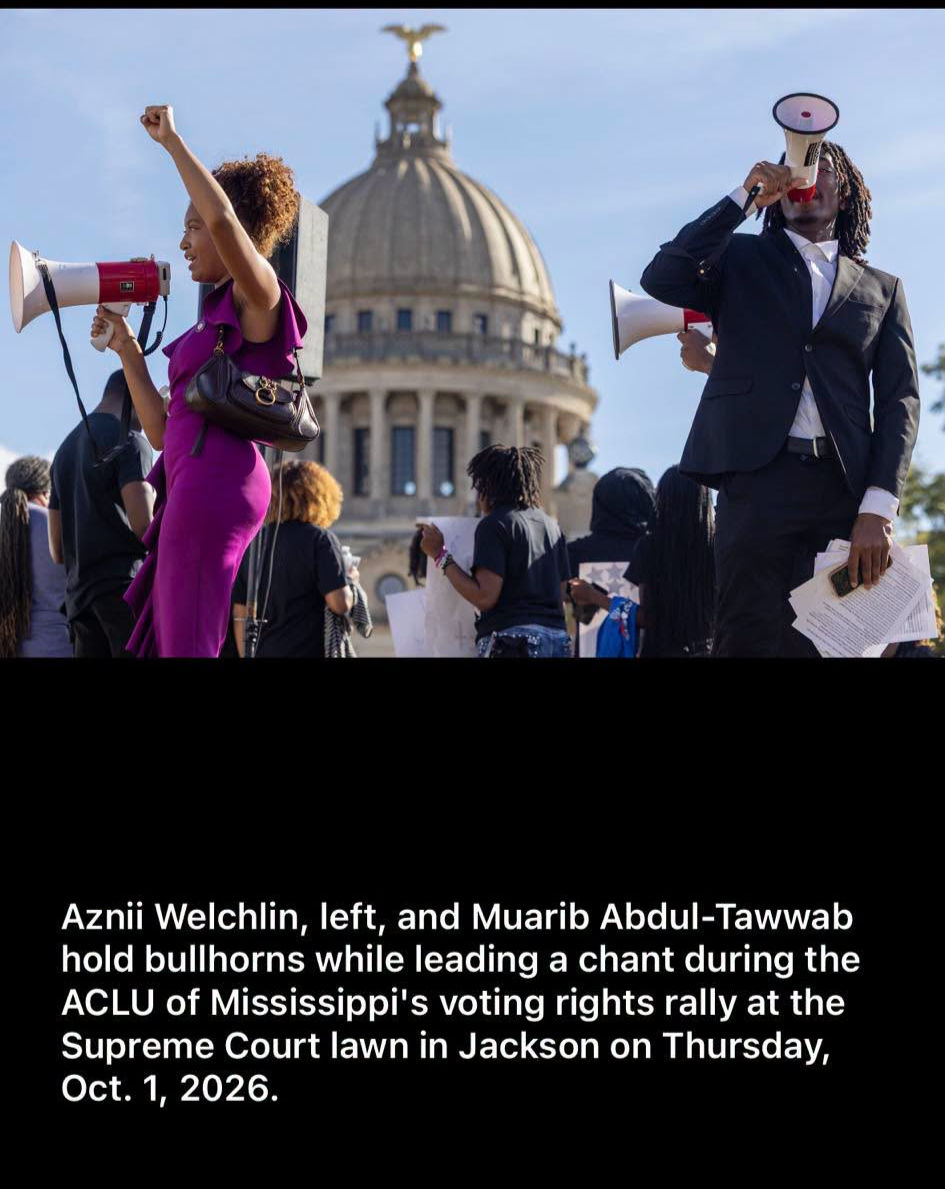
And for the people of Mississippi, the call is just as clear: Stay informed. Stay engaged. Check your voter status. Have conversations in your communities. And most importantly—vote.
I pledge to continue working colleagues and civic engagement partners to roll out critical strategies that help voters understand the gravity of this decision.
The Bottom Line
Mississippi has never moved forward without people showing up, organizing, and demanding better. This moment is no different. We make democracy work when everyone is involved.